Overview
Conducted a behavioral analysis of smartphone application usage patterns using timestamped app-launch logs from the StudentLife dataset.
Engineered structured behavioral features from raw event data to model session behavior, total engagement time, and burst activity. The goal was to transform low-level log data into interpretable behavioral metrics suitable for digital well-being analysis and human-computer interaction research.
Video Presentation
Approach
- Cleaned and structured raw timestamp-based smartphone logs
- Converted UNIX timestamps into datetime objects for temporal analysis
- Defined sessions using inter-launch interval thresholds
- Engineered behavioral metrics:
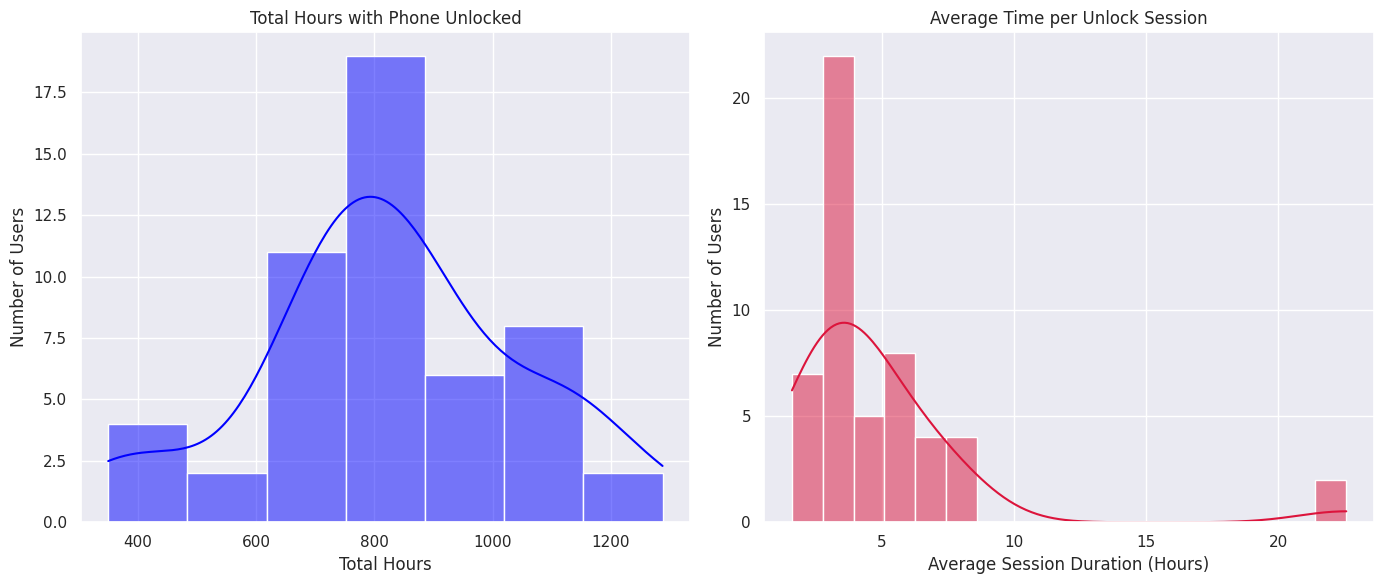
- Total usage time
- Average session duration
- Inter-launch interval distribution
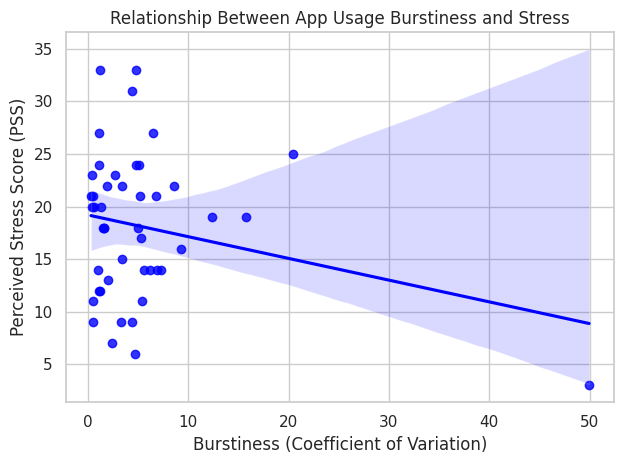
- Burstiness coefficient
- Performed exploratory data analysis (EDA) with statistical summaries and visualizations
- Compared behavioral patterns across users
Results
- Identified significant variability in smartphone engagement across users
- Observed heavy-tailed distributions in inter-launch intervals
- Detected burst behavior in high-frequency app launch patterns
- Distinguished between short-burst users and sustained-session users
- Demonstrated how raw log data can be transformed into interpretable behavioral signals
Teamwork & Collaboration
This project was completed in a collaborative data science team.
- Divided responsibilities across data cleaning, feature engineering, visualization, and statistical interpretation
- Used shared Jupyter notebooks and Git-based version control for reproducibility
- Held regular coordination meetings to align on modeling decisions and evaluation methods
- Contributed specifically to session modeling logic and burstiness metric design
What I Learned
- How to convert raw event logs into structured behavioral features
- How session definitions impact downstream behavioral metrics
- Why burstiness captures behavioral intensity better than simple averages
- How real-world human activity data often follows heavy-tailed distributions
- How to collaborate effectively on a reproducible analytical workflow